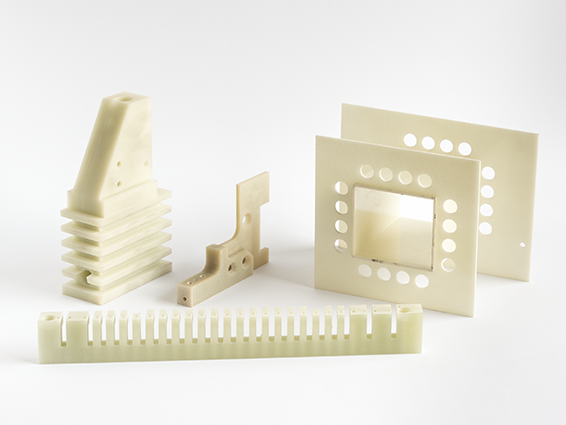
Today, composite materials play a leading role in industrial, biomedical and sports applications, as well as in many other fields, because they stand out for their strength, lightness and reliability. They are materials made by combining two or more different components, joined together to achieve higher performance than the individual materials would deliver on their own. The purpose of composite materials is therefore to combine the strengths of materials with different characteristics to achieve better performance.
The growing use of these materials is driven by market demand from a range of sectors: aeronautics, aerospace, biomechanics, furniture, marine and sports. Composite materials generally consist of a matrix, which holds the structure together, and a reinforcement, which provides stiffness, mechanical strength and other specific properties.
Among the most common are glass fiber and carbon fiber reinforced composites, materials that make it possible to produce high-performance components even under demanding operating conditions, such as variable loads and stress.
Composite Materials: Key Characteristics
The rationale behind the increasingly widespread use of composite materials across industry is easy to grasp: these materials make it possible to produce components with precise characteristics, perfectly aligned with actual design requirements. The main benefits of composite materials include:- low weight;
- excellent structural stiffness;
- high mechanical strength;
- great versatility across applications;
- corrosion resistance.
Composite Materials: Rapid Growth in Industrial Applications
The sharp rise in the use of composite materials is seen mainly in the following industrial sectors:- aerospace: in this field, these materials are used to build fuselages, protective elements, lightweight structures and wings. The need to reduce weight and improve energy efficiency in aerospace makes composite materials an almost obligatory choice, providing components that ensure impact resistance and the required stiffness;
- automotive: in the automotive industry, composite materials are used to make panels, chassis and body parts to achieve better fuel efficiency and driving dynamics, without, of course, compromising durability and safety;
- marine and sports: in the marine industry, composite materials are used to build hulls, protective components and mast structures. In sports, they are used for rackets, bicycles and boards, as they offer the lightness and stiffness needed for high performance;
- renewable energy and energy infrastructure: in wind turbine development, composite materials provide adequate resistance to deterioration, while their lower weight makes transport and installation easier.