Precision, Technology and Expertise in CNC Machining of Composite Materials
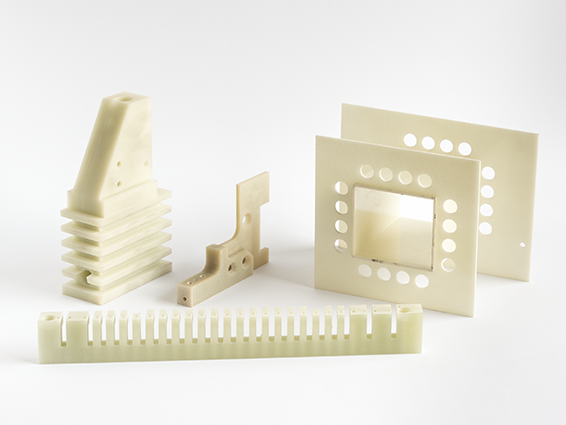
Machining composite materials requires specific expertise and technologies capable of handling materials whose characteristics differ greatly from those of traditional metals. CNC machining of composite materials makes it possible to turn sheets, rods, tubes and semi-finished products into industrial components made to the geometries and dimensions defined by the design, while maintaining high levels of precision and repeatability.
Composite materials such as glass polyester, glass epoxy and other reinforced laminates are chosen in many industrial fields thanks to their combination of mechanical, electrical, thermal and chemical properties. Machining them, however, requires in-depth knowledge of the material and of cutting parameters. Their layered structure and the presence of reinforcing fibers can make machining more complex than with a homogeneous material. For this reason, the choice of tool, machining speed and CAM strategy plays a decisive role in the final result.
How CNC Machining of Composite Materials Is Performed
Effective CNC machining starts with the design. Using CAD/CAM software, the component drawing is converted into a program that allows the machine tool to follow the required geometries precisely. Programming the production cycle in a CAD/CAM environment makes it possible to handle even components with complex shapes, holes, milled features, pockets and three-dimensional machining.
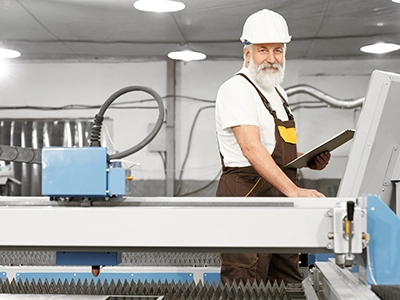
Isolmax uses 3- and 5-axis CNC machining centers, a configuration that makes it possible to machine complex components and, where possible, reduce the number of setups required. The machine fleet also includes solutions with working areas of up to 6000 × 3000 mm and a Z-axis travel of up to 1000 mm, offering considerable flexibility in handling parts of different sizes.
Precision, however, does not depend solely on the machine.
When machining composites, it is essential to identify specific tools and parameters suited to the material, in order to limit vibration, wear, overheating and possible edge defects. The operator’s experience and the correct set-up of the machining strategy therefore become an integral part of the production process.
Why Choose Isolmax for CNC Machining of Composite Materials
The value of an industrial service is measured not only by the ability to perform a machining operation, but also by the ability to follow the component from design analysis through to production. This is precisely the approach that sets Isolmax apart: a company specialized in machining and die-cutting sheets, rods, tubes, laminated electrical insulators and plastics.
The company has developed specific expertise in machining composites since its founding in 1989, and as early as 1992 it introduced a 5D CAD/CAM system, anticipating the evolution of machine tool programming technologies.
Today, this experience translates into the ability to machine composite materials, laminates and engineering plastics through milling, drilling, turning, cutting and 3D CAD/CAM machining, with solutions tailored to the needs of each project. Turning is also carried out on CNC and conventional lathes, with a capacity of up to 800 mm in diameter and 4 meters in length.
Another distinctive strength is the ability to handle different production volumes: from prototypes and one-off parts to small batches and industrial production runs, with close attention to the repeatability of results. This makes it possible to meet very different requests, from custom technical components to parts for specific industrial sectors.
Composite Materials and Industrial Applications
The decision to use a composite generally stems from the need to combine several properties in a single component. Mechanical strength, electrical insulation, lightness, dimensional stability and resistance to environmental conditions can make these materials particularly attractive for technical applications.
Isolmax machines, among others, materials based on glass polyester, glass epoxy, phenolic paper and cotton laminates, thermoplastics and thermal insulators. Applications span many sectors, including electromechanical, energy, railway, automotive, mechanical engineering, aerospace, chemical and marine.
Ultimately, CNC machining of composite materials is a process in which technology and material knowledge must go hand in hand. An advanced CNC machine makes it possible to achieve precise geometries, but it is the combination of CAD/CAM design, tool selection, parameter set-up and technical expertise that determines the quality of the component.
For companies looking for a partner capable of turning a technical drawing into a finished component, Isolmax offers CNC technology, experience in machining composites and customization capabilities, with an approach focused on precision, reliability and the specific needs of each customer.