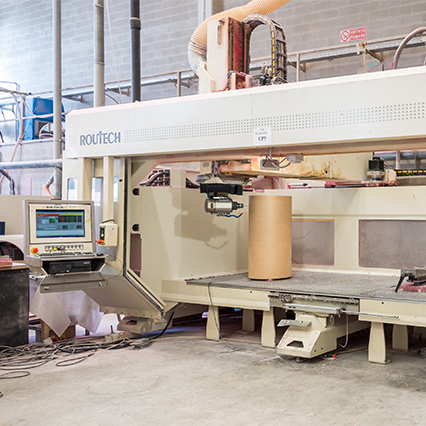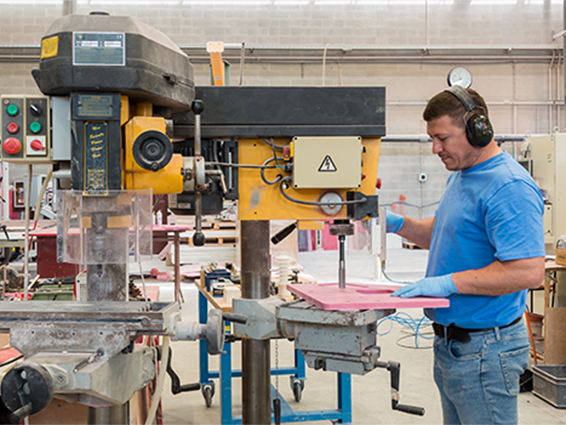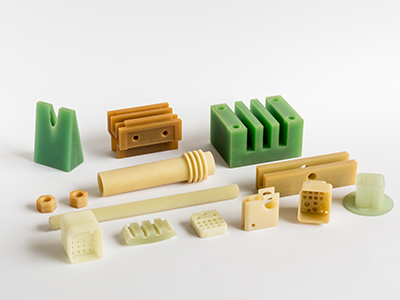
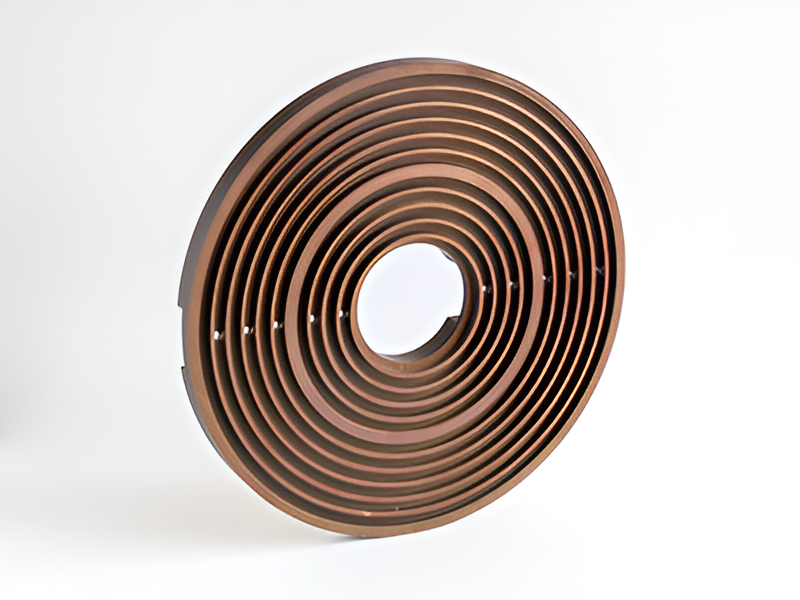
Used in many industrial fields for its mechanical and physical properties, bachelised canvas is a material that never goes out of style. It is a fabric known and used mainly for its insulating properties, still irreplaceable for self-lubricating mechanical applications. Origin, characteristics, areas of application, formats and advantages: here is an overview of bakelised canvas.
Bakelite fabric: origin and characteristics
Greater resistance with the impregnation process
Its name derives from Bakelite, a phenolic resin used in the processing of linen and cotton fabrics. Through the impregnation process, the raw fabric acquires greater thermal and mechanical resistance, making it particularly suitable for applications that require high insulation and durability.
Bachelised fabric is characterised by:
– high thermal resistance: this material withstands high temperatures while maintaining its structural properties unchanged;
– thermal insulation: due to its thermal insulation qualities, bachelised fabric is also widely used in fields such as electrical engineering and electronics;
– mechanical resistance: the combination of phenolic resin and fabric gives bakelised canvas greater resistance, even when subjected to high stress, as it is resistant to wear and impact;
– chemical resistance: a property that makes the material resistant to solvents and oils, suitable for use in even highly aggressive industrial environments;
– dimensional stability: even in adverse circumstances, bakelised canvas does not lose its original shape and dimensions. Due to its stability and dimensional rigidity, it is often used to make structural components.
Bakelised canvas: areas of application
Irreplaceable for self-lubricating mechanical applications
Still irreplaceable today for self-lubricating mechanical applications, bakelised canvas is used in many other fields, mainly in areas that require materials characterised by insulation and durability, such as:
– the mechanical and automotive industries: in these fields, the material is used for the production of gaskets, gears and other components that must withstand high mechanical stress;
– the electrical industry: in this industrial field, bakelised canvas is widely used, above all for its insulating properties. In the electrical field, this material is used to make transformers, generators, motors and insulating panels;
– craftsmanship: bakelised canvas is even used in the craft sector to make tools and decorations.
In addition, this material is often used in industry to create actual thermal barriers to protect equipment from excessive heat sources.
There are therefore many areas of application for bakelised canvas because we are talking about a very versatile, long-lasting material that can be used and is reliable even in extreme circumstances.
It is a material that is resistant to chemical agents and high temperatures and, thanks to its versatility, can be adapted to many different areas: from self-lubricating mechanical applications to electronics and the automotive industry.
Bakelised fabric: the different formats
Distinguished according to use
Bakelised fabric formats are different and distinguished according to use. The most commonly used formats include:
– tubes: a format mainly used for the manufacture of mechanical components that need to withstand bending;
– sheets: used mainly in industry, sheets are processed to make insulating or mechanical components;
– tapes: used in the electrical field to protect and insulate cables and coils;
– bars: used in the manufacture of gears and components for the automotive sector.
Ultimately, bakelite cloth is capable of guaranteeing exceptional electrical and mechanical properties, making it the preferred choice in many industrial fields. It is a long-lasting, self-lubricating material that requires little maintenance and is highly resistant to heat and wear. Due to its indisputable extraordinary characteristics, Bakelite cloth is a true excellence for industrial markets. It is an indispensable material for the production of many products.