Advanced composite materials, as we know them today, are the result of decades of research and innovation, driven by a common goal: to ensure effective thermoelectric insulation.
As is well known, this is a fundamental property for the production of numerous components used in the electrical and electronic sector, without which the proper functioning of circuits, equipment and systems of varying complexity would inevitably be compromised. The first real breakthrough in this direction came at the beginning of the 20th century with the invention of Bakelite, the first thermosetting plastic material in history.
Bakelite: the material that changed industry
Thanks to the brilliant intuition of Belgian-born American chemist Leo Hendrik Baekeland, bakelite was synthesised for the first time in 1905 in an attempt to create a substitute for common shellac.
For the experiment, Baekeland successfully combined phenol and formaldehyde, creating a completely new plastic material that was dark in colour and resistant to heat and electricity.
Bakelite, as he named it after his surname, was soon patented and put into production, bringing about a real revolution in the industrial sector.
This material immediately stood out from the organic plastics used until then due to its high quality and resistance.
For this reason, its production became increasingly intense during the 20th century, with a particular peak in the 1960s.
Thanks to its thermoelectric insulating properties, Bakelite soon became a fundamental material, especially in the electronic and electrical sector, often being used for the production of various types of components, including switches and sockets.
The evolution of laminated materials
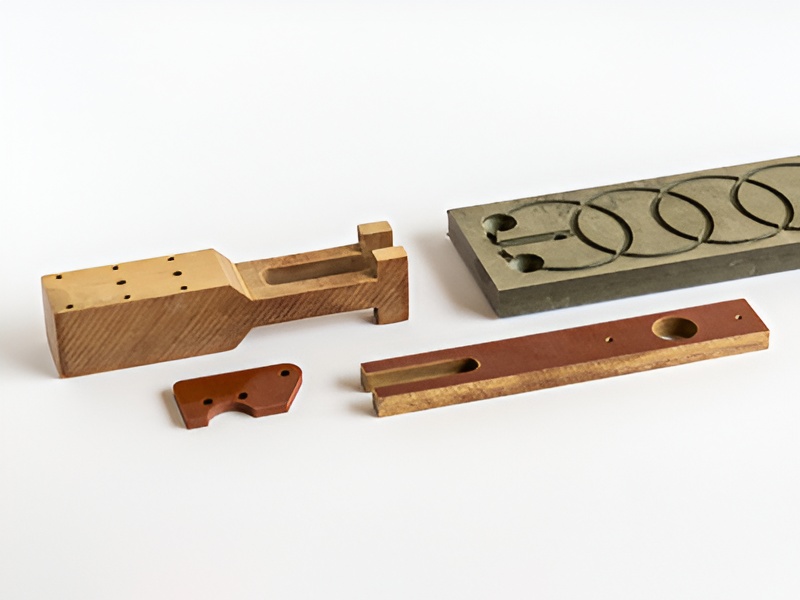
The invention of Bakelite was, to all intents and purposes, a real milestone in the production of synthetic materials. This led to the creation of phenolic laminated materials (also known as HPL – High Pressure Laminate), made from a combination of Bakelite and fibrous layers such as paper, wood or canvas.
These composite materials are known for their high mechanical strength and have therefore proved to be a valid solution for the manufacture of components capable of effectively resisting damage caused by wear and tear and atmospheric events.
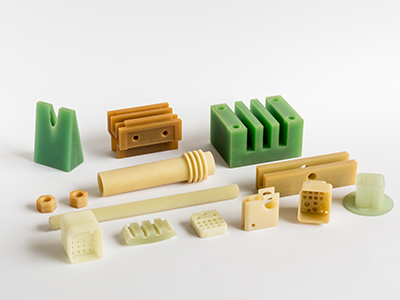
By combining fibreglass with special epoxy resins, a new composite material was obtained, known as epoxy glass, known for its high mechanical strength and even more stable thermal insulation capacity.
Thanks to these two main characteristics, in addition to greater reliability due to the durability of epoxy compounds, it has been possible to define four different types of epoxy glass (G10, G11, FR4 and FR5), to fully meet the professional needs of the most demanding electrical and electronic manufacturing, such as those in the aerospace and military sectors and all those production contexts that are used in the manufacture of industrial components capable of withstanding very high temperatures and constant humidity levels.
In addition to epoxy glass, which is still widely used in many standard and specialised production processes, today’s industry can also rely on the use of advanced composite materials, designed by combining fibres of various types (such as fibreglass, carbon fibre and aramid) and specific polymer matrices.
Thanks to the use of these components, advanced composites are able to offer both strength and rigidity, while remaining remarkably lightweight
These materials enable high performance in every situation, representing an essential component in many different production sectors: from the naval sector to the automotive sectors, through to construction and infrastructure development, advanced composites have become a benchmark in high-tech manufacturing, thanks to their ability to effectively withstand mechanical and atmospheric stresses.
The history of insulating laminated materials shows a progressive evolution, driven by the continuous and ambitious pursuit of safety, strength and reliability, factors that remain at the heart of all technological and industrial innovation today.