Epoxy resin combined with glass fiber significantly enhances thermal insulation. It is a composite material characterized by the outstanding insulating properties of epoxy resin and the durability and strength of glass fiber.
A highly functional and long-lasting combination, which finds application in numerous industrial fields.
Epoxy glass fiber sheet: a valuable insulating resource
We are talking about a composite material capable of combining the versatility of resin with the strength of glass fibers. The latter, developed from alumina, silica, and other oxides, form a true reinforcing network within the sheet.
The fibers are meticulously embedded in epoxy resin matrices, a polymer known for its high chemical resistance. Epoxy resins are processed through polymerization processes, which allow stable relationships to form between polymer chains, resulting in rigid and efficient structures.
The complex arrangement of the fibers within the polymerized epoxy matrices plays a decisive role in improving the thermal performance of epoxy glass fiber sheets.
An additional advantage lies in the ability to customize fiber distribution and the type of epoxy resin used, according to the required performance. The result is a highly versatile material, adaptable to multiple industrial sectors.
Epoxy glass fiber sheets: insulation and strength
Insulation and low thermal conductivity are the two main qualities of sheets made from epoxy resin and glass fiber. These materials exhibit significantly lower thermal conductivity compared to many traditional insulating materials and numerous metals.
Epoxy resin is able to withstand high heat fluxes and, when combined with glass fiber reinforcement, guarantees excellent insulating performance. Epoxy matrices also develop micro air pockets that act as barriers to heat transfer, further improving insulation.
Glass fibers contribute to remarkable structural rigidity, while epoxy resin ensures high impact resistance. This combination allows the sheets to offer significant mechanical strength without compromising insulating properties.
Finally, epoxy resin protects the fibers from chemical agents and moisture, ensuring reliable and long-lasting performance over time.
Applications of epoxy resin and glass fiber–based materials
The combination of epoxy resin and glass fiber enables the widespread use of this composite material. The main characteristics that encourage its adoption are:
- corrosion resistance;
- dielectric properties;
- impact resistance;
- durability;
- excellent cost-effectiveness ratio.
This makes the composite an extremely reliable material in numerous application areas, including:
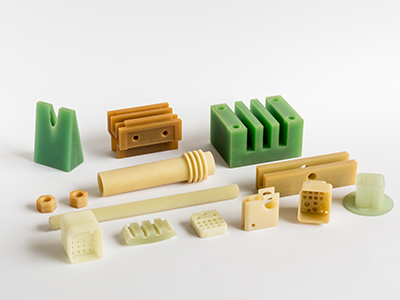
- Electrical insulation: high-voltage switchboards, static insulators, induction furnaces;
- Mechanical engineering: sealing components, gaskets, welding tools, reinforcements for the automotive, marine, and aerospace sectors;
- Construction: lightweight and strong structures, panels, and building components.
Conclusion
Epoxy resin combined with glass fiber is today one of the most reliable and high-performing insulating materials on the market. Thanks to its intrinsic characteristics, it has quickly gained ground in numerous industrial sectors, establishing itself as a preferred solution compared to many traditional materials.
A winning combination, recognized and appreciated for its efficiency, durability, and application versatility.